For young astronauts (and grown-ups who still are)
The universe is not homework - it is the biggest playground
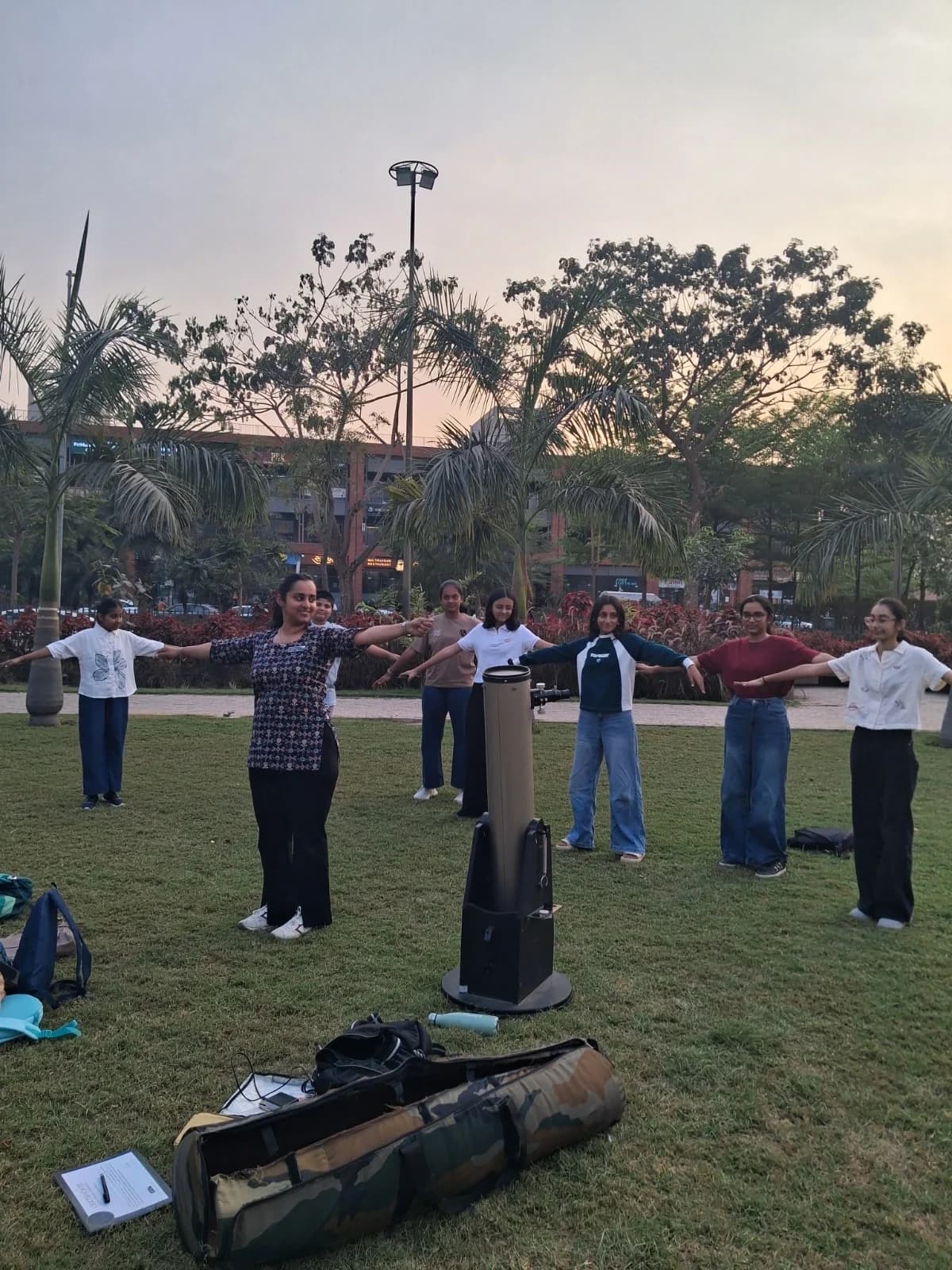
Here, no question is too small. Why is the Moon sometimes orange? Could we live on Mars? What happens if you fall into a black hole (spoiler: not recommended)? At the Museum you can look, touch models, watch 3D stories, and maybe even peek through a telescope on a special night.
Cosmic questions corner
Tap any card - answers are short, friendly, and honest when scientists are still figuring things out.
Why do stars twinkle but planets don’t?+
Starlight is a tiny point that gets bent and jiggled by Earth’s moving air. Planets look slightly bigger in the eyepiece, so the wiggles average out - they shine steadier.
How long would a sunbeam take to cross our galaxy?+
Light needs about 100,000 years to travel from one side of the Milky Way to the other. That is why astronomers use light-years - distances are enormous.
What is a light-year, really?+
It is a distance, not a time. One light-year is how far light travels in a year - about 9.46 trillion kilometres. It is a cosmic measuring tape.
Why does the Moon follow us in the car?+
The Moon is so far away that as you move, its direction in the sky barely changes - a fun trick of perspective, not magic (though it feels magical).
Could you stand on Jupiter?+
There is no solid ground to stand on - Jupiter is mostly gas and liquid deep inside. Robotic spacecraft are our way to “visit” such worlds.
What makes a meteor shower?+
Earth passes through a trail of dust left by a comet. Grains hit our atmosphere and glow - each streak is a tiny visitor burning up high above us.
Why is space silent in movies - and in real life?+
Sound needs air (or water) to travel. Space is mostly empty, so explosions and engines would not carry waves to your ears - sci-fi “whoosh” is drama, not physics.
How big is the Sun compared to Earth?+
Over a million Earths could fit inside the Sun by volume. It looks small in the sky only because it is about 150 million kilometres away.
What is a nebula?+
A vast cloud of gas and dust - sometimes a stellar nursery where new stars form, sometimes the glowing remains of an old star’s story.
Why do we always see the same face of the Moon?+
The Moon is tidally locked: it takes as long to spin once as to orbit Earth, so one hemisphere always faces us (with a slight wobble called libration).
Are we made of stardust?+
Elements heavier than helium were forged in stars and scattered when stars died. The iron in your blood and calcium in your bones really did take a cosmic journey.
Bring a grown-up - they get curious too
Parents and grandparents often say they wish they had a place like this when they were young. Good news: the sky is still there, and so are we.
- Space club meets twice a month - online & offline.
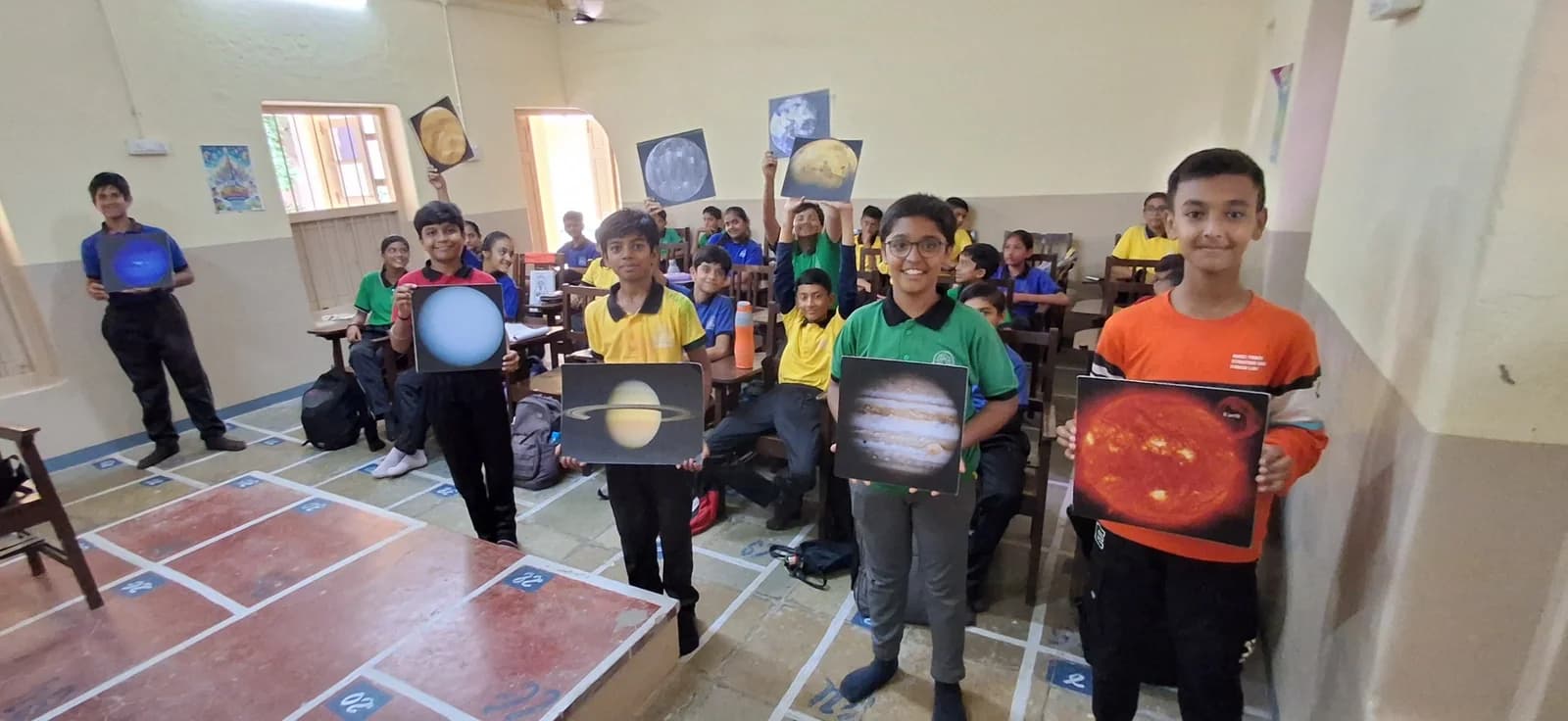
- School programmes (TASC) turn classrooms into launch pads.
- Flash cards & goodies in the shop for space fans.