
Welcome to Tanmaye's Amazing Space Museum
Space Gurukul of India - Cosmic odyssey since 1986
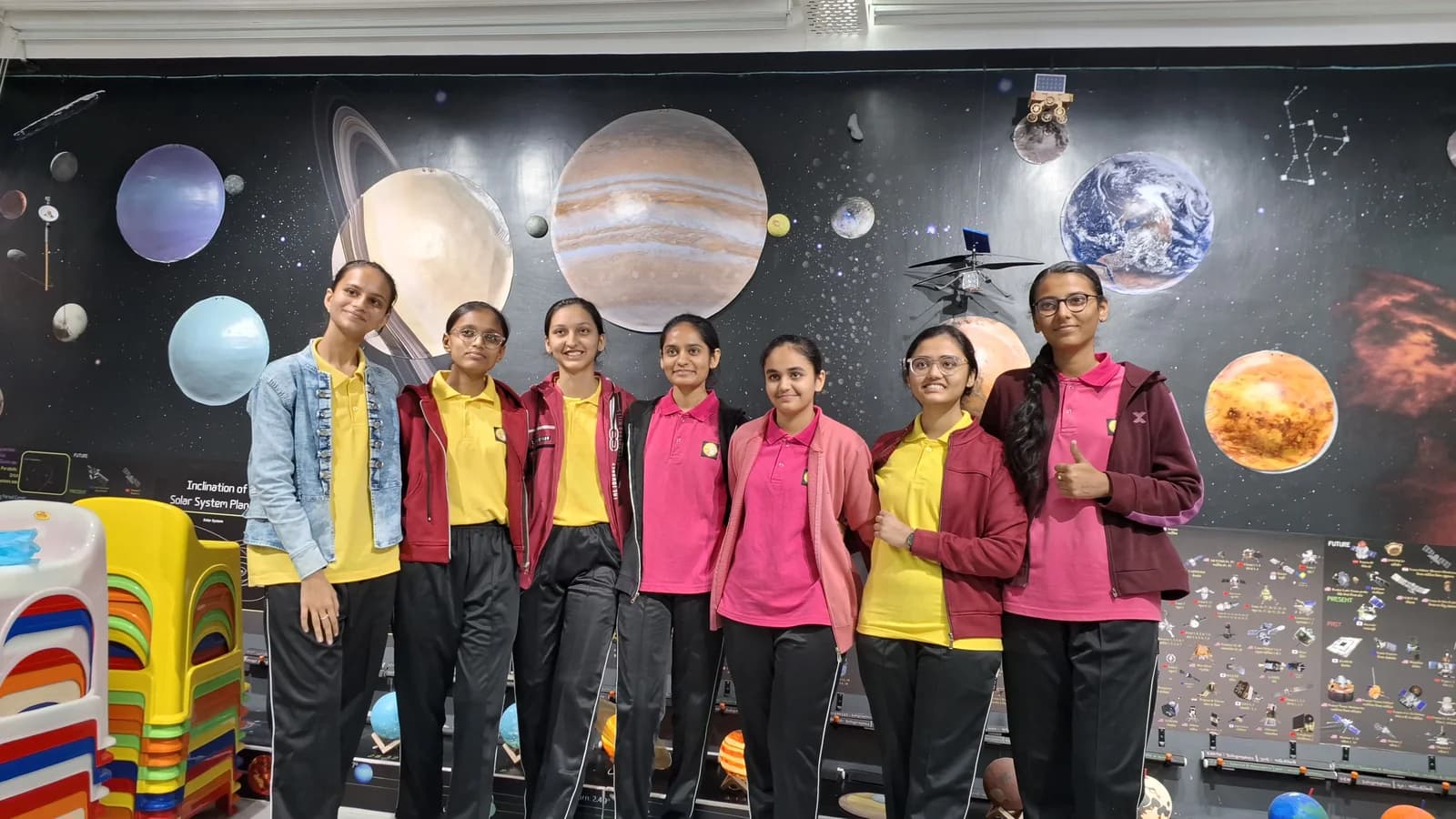
India's premier zero-digital space experience. Touch genuine space rocks, step inside a Space Station, and explore cosmic galleries designed to be experienced through your senses-not screens. A unique universe curated by astronomer Tanmaye Vyas.
- Friday Film Fiesta
- Sky-watch parties
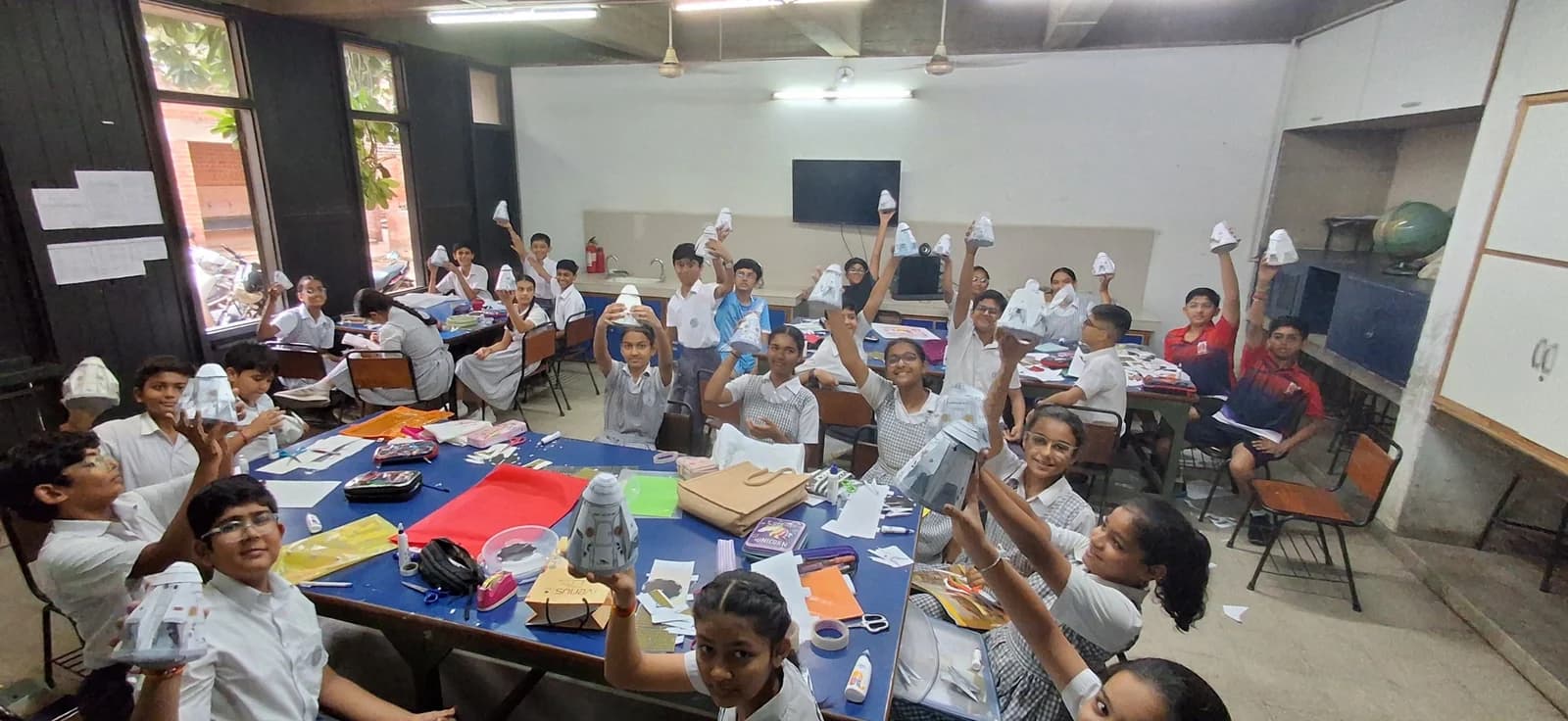
- Junior astronaut fun
- Asteroid hunts
- 3D space adventures
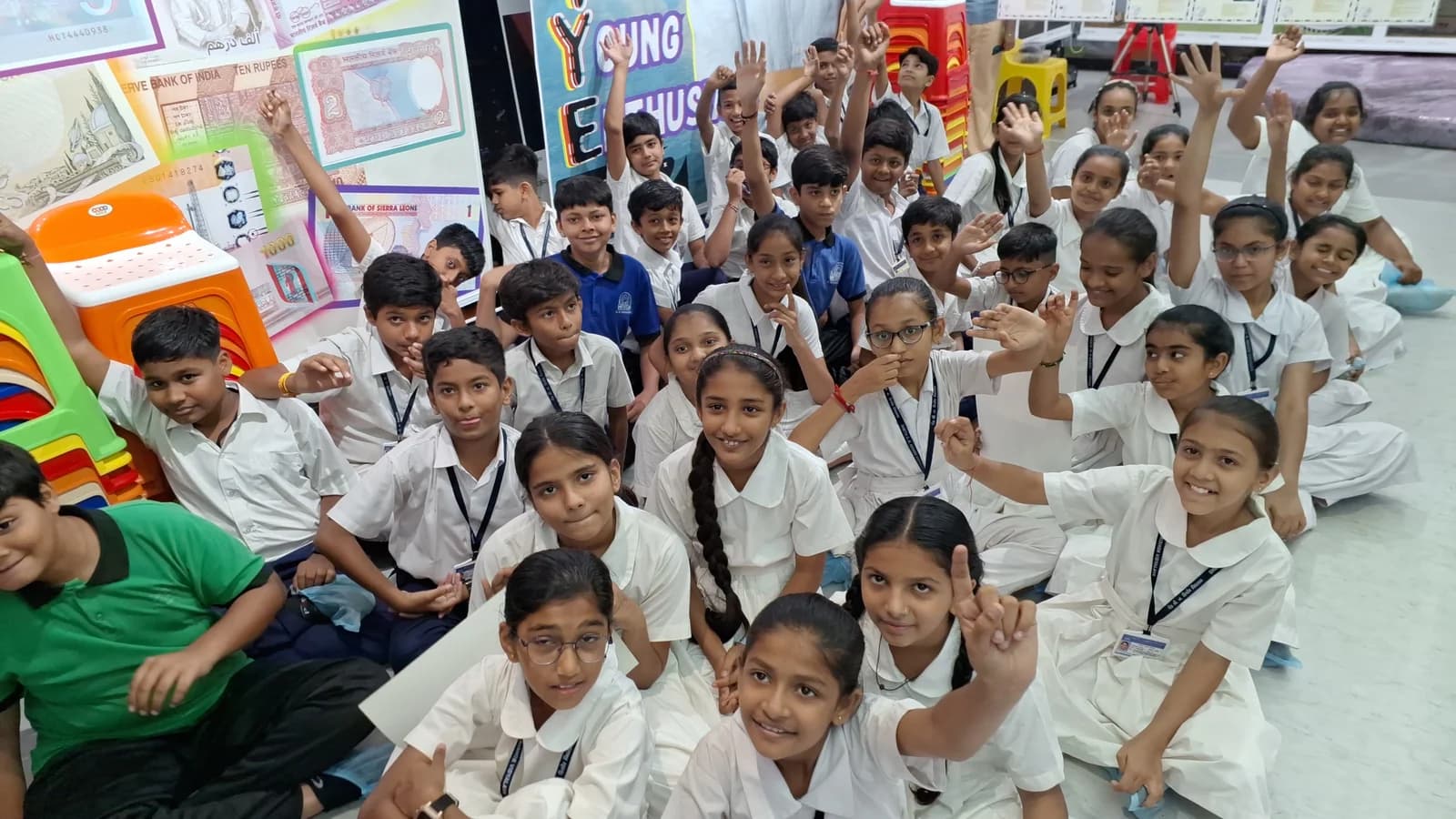
Rockets, galaxies, Moon walks, and ISRO milestones - under one roof.
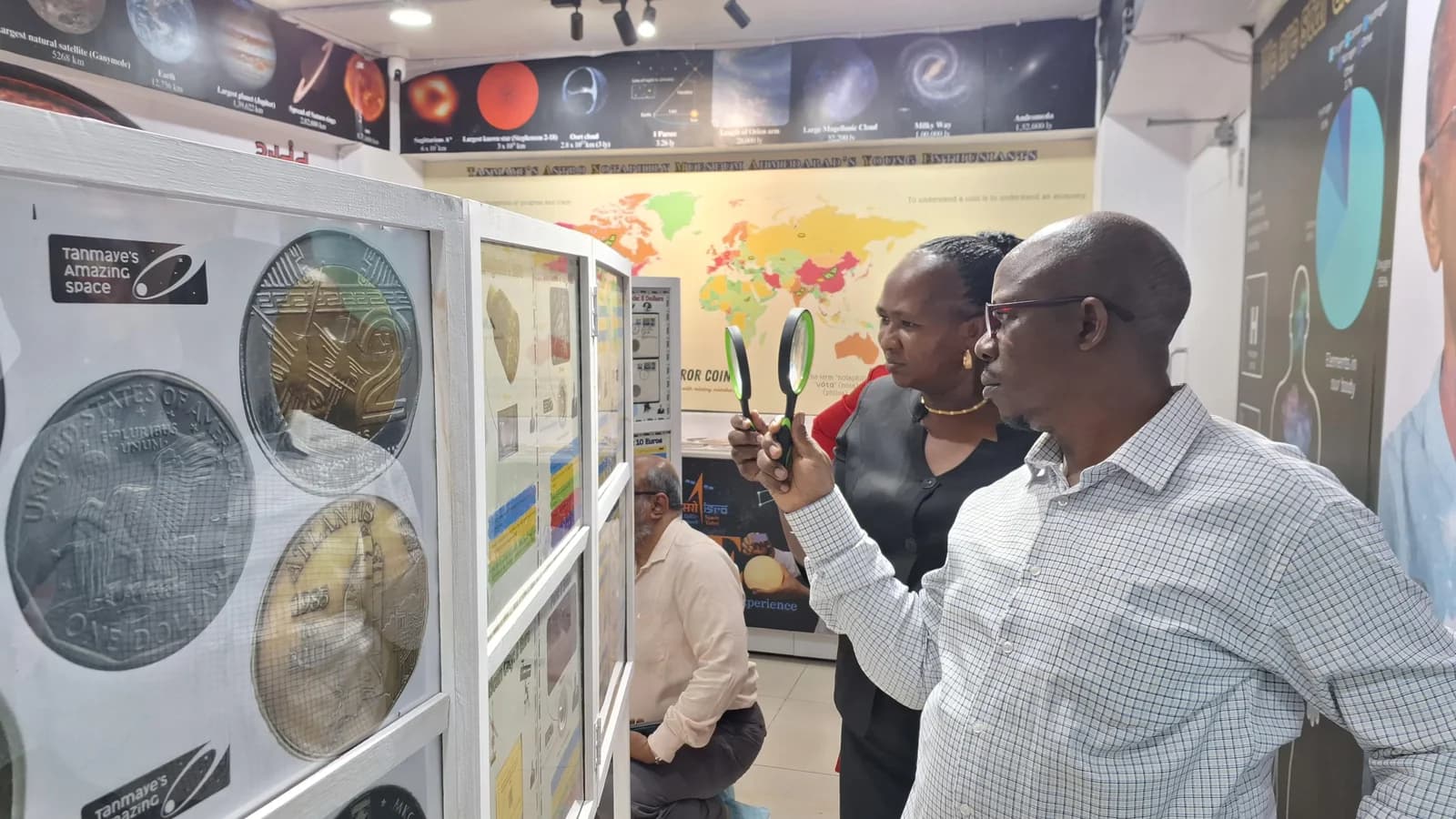

Historic Milestone
Indian Astronaut Group Captain Shubhanshu Shukla sir exploring Tanmaye's Amazing Space Museum.
When Two Space Journeys Met.
Group Captain Shubhanshu Shukla's journey took him from the Indian Air Force to becoming India's first astronaut to visit the International Space Station, inspiring a billion dreams and marking a historic milestone in India's human spaceflight programme.
Our Guru Shri Tanmaye Vyas sir's journey began in 1982 with his passion for astronomy. Since 1986, he has been dedicated to teaching astronomy and, for over four decades, has carefully preserved humanity's space heritage through rare space collectibles, stamps, currencies, meteorites, and immersive experiences that today form Tanmaye's Amazing Space Museum-the Space Gurukul of India.
During his visit, Group Captain Shubhanshu Shukla explored Tanmaye Sir's lifelong collection and experienced the International Space Station Experience, real space rocks and meteorites, and the world's first Astrophilately & Space Currency Collection. The visit became even more special as it took place exactly one year after his historic ISS mission-making it his symbolic "Second Orbit" on Earth.
When an astronaut who has seen the Earth from space experiences a museum built by a man who has spent his life bringing the Universe closer to humanity, it becomes more than a visit-it becomes a celebration of India's space legacy and its future.
Tanmaye's Amazing Space Museum-where the Universe is not just observed, but experienced.
We are Grateful ✨
In the News: ANI Feature
Indian Astronaut Group Captain Shubhanshu Shukla's "Second Orbit" at Tanmaye's Amazing Space Museum, Ahmedabad
When India's astronaut, Group Captain Shubhanshu Shukla, speaks about Tanmaye's Amazing Space in an ANI News feature, it's a recognition of over 40 + years of Shri Tanmaye Vyas' dedication to inspiring people through space education.
Proud to share this historic moment. 🇮🇳🚀
Tonight's sky
Aries
The Ram. In Greek mythology, Aries is the golden ram that rescued Phrixos and took him to Colchis, where he sacrificed the ram to the gods.
In the News
Press Releases
Read about our latest events, astronaut visits, and community outreach in the media.
Inside the experience
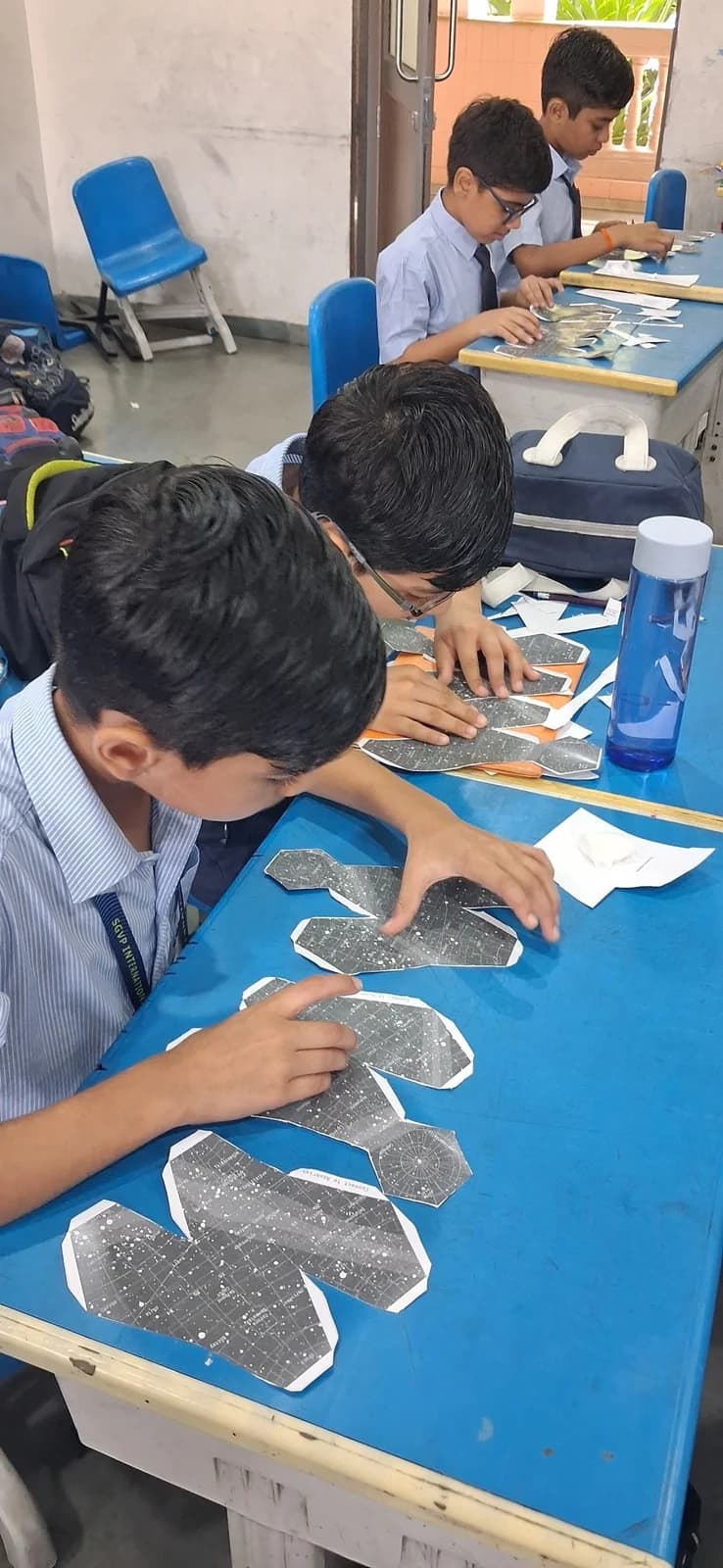
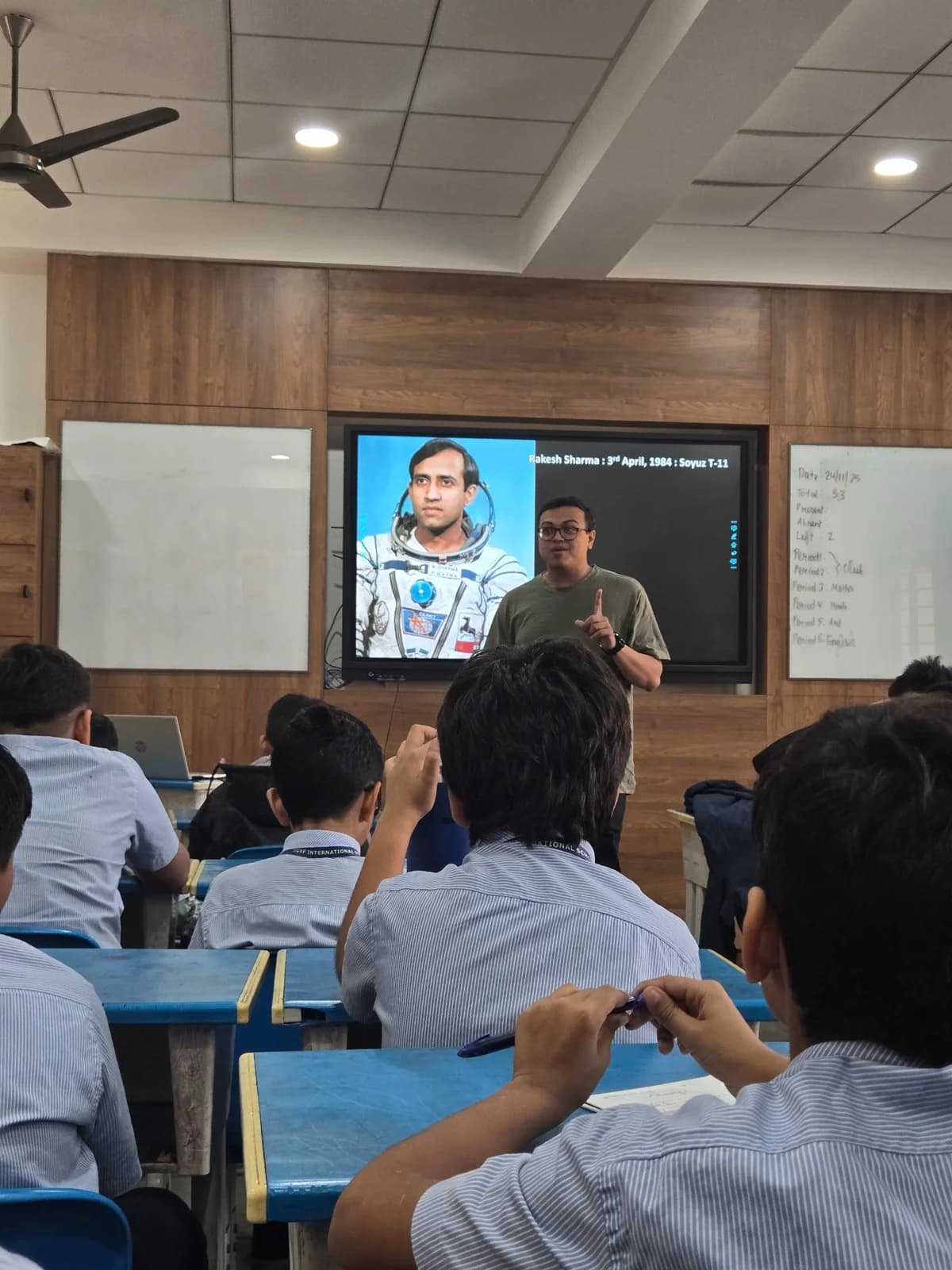
Not a museum where you whisper - a Museum where you wonder out loud
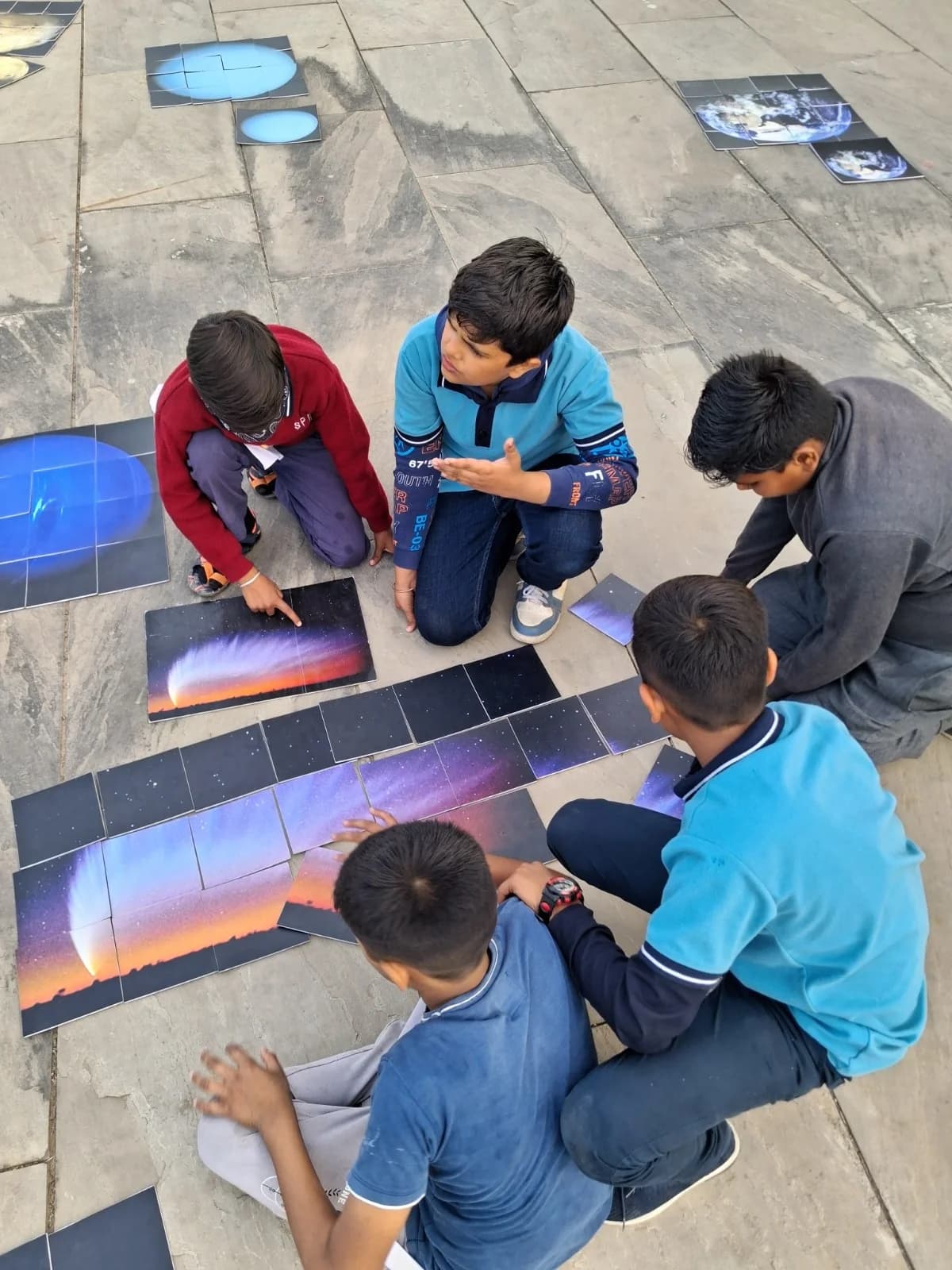
Every corner is built to reward curiosity: younger visitors get wow-moments and simple language, while serious students find depth, data, and mentors who have seen decades of real sky events.
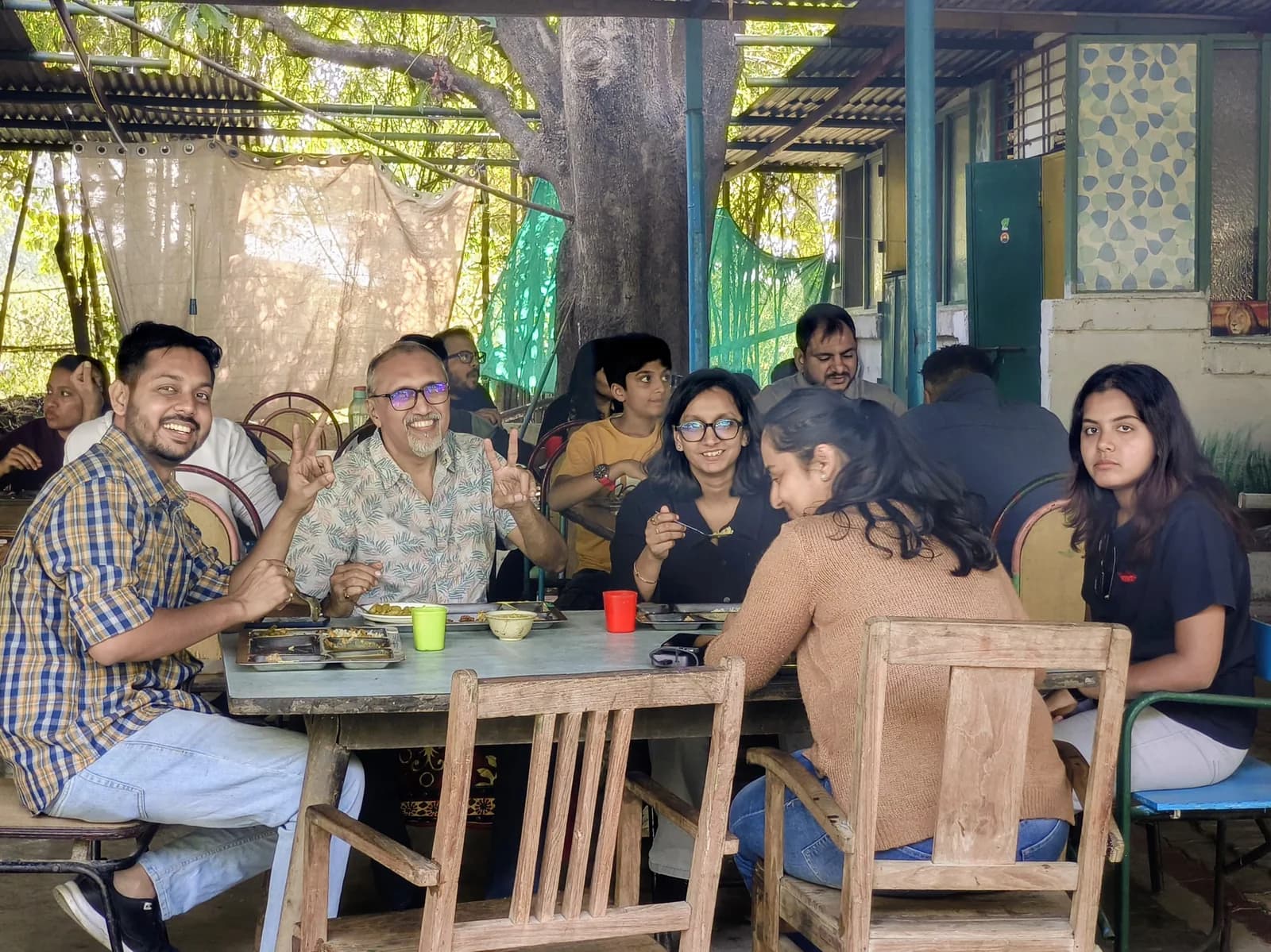
Start anywhere
Choose your mission
Every page is a wormhole - dive deeper into the parts of the universe you love most. Tap a card and keep exploring.
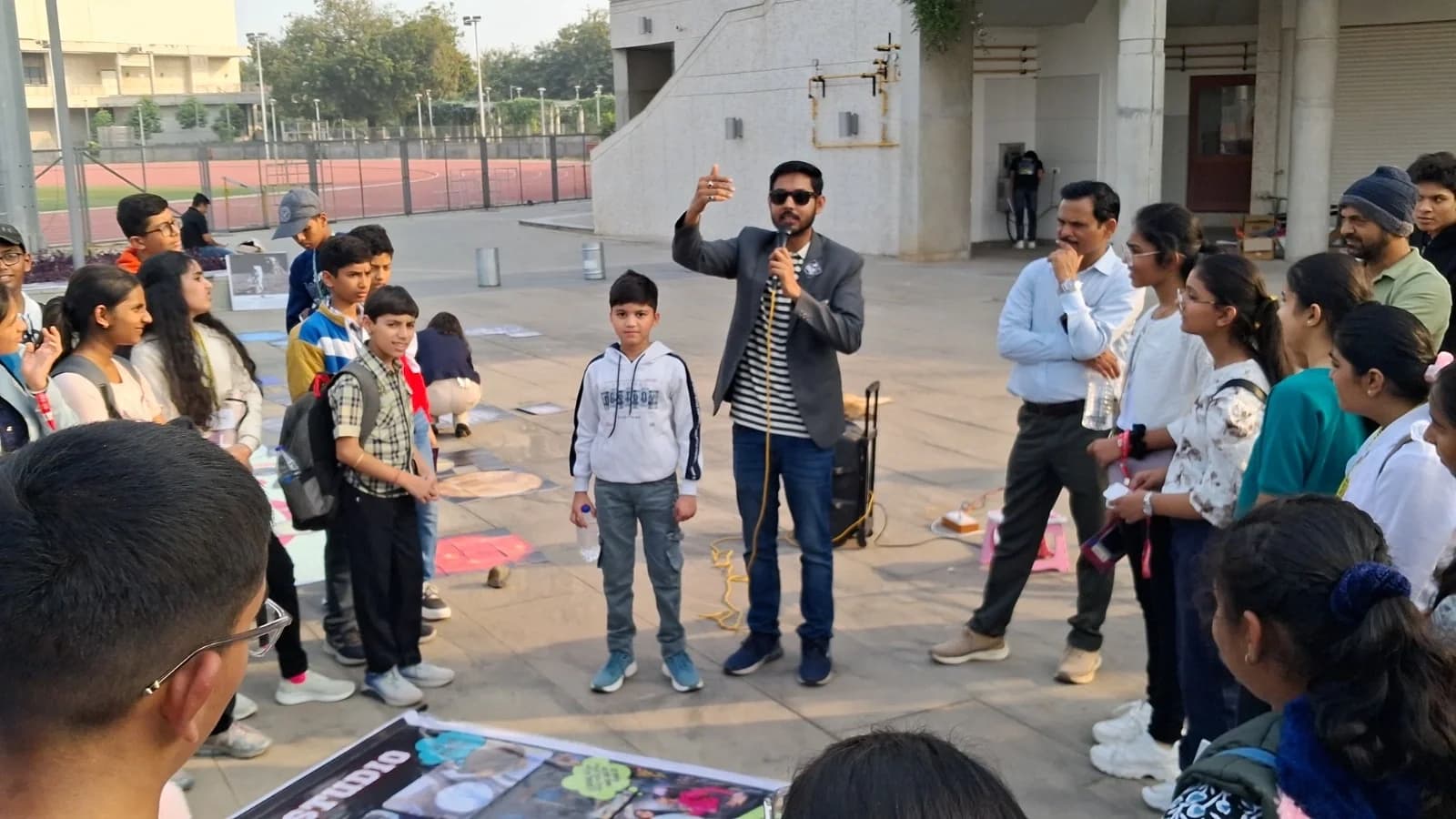
Your journey in three beats
Simple on purpose - so families, schools, and solo explorers know exactly what happens after they say “I'm interested.”
 01
01Pick your path
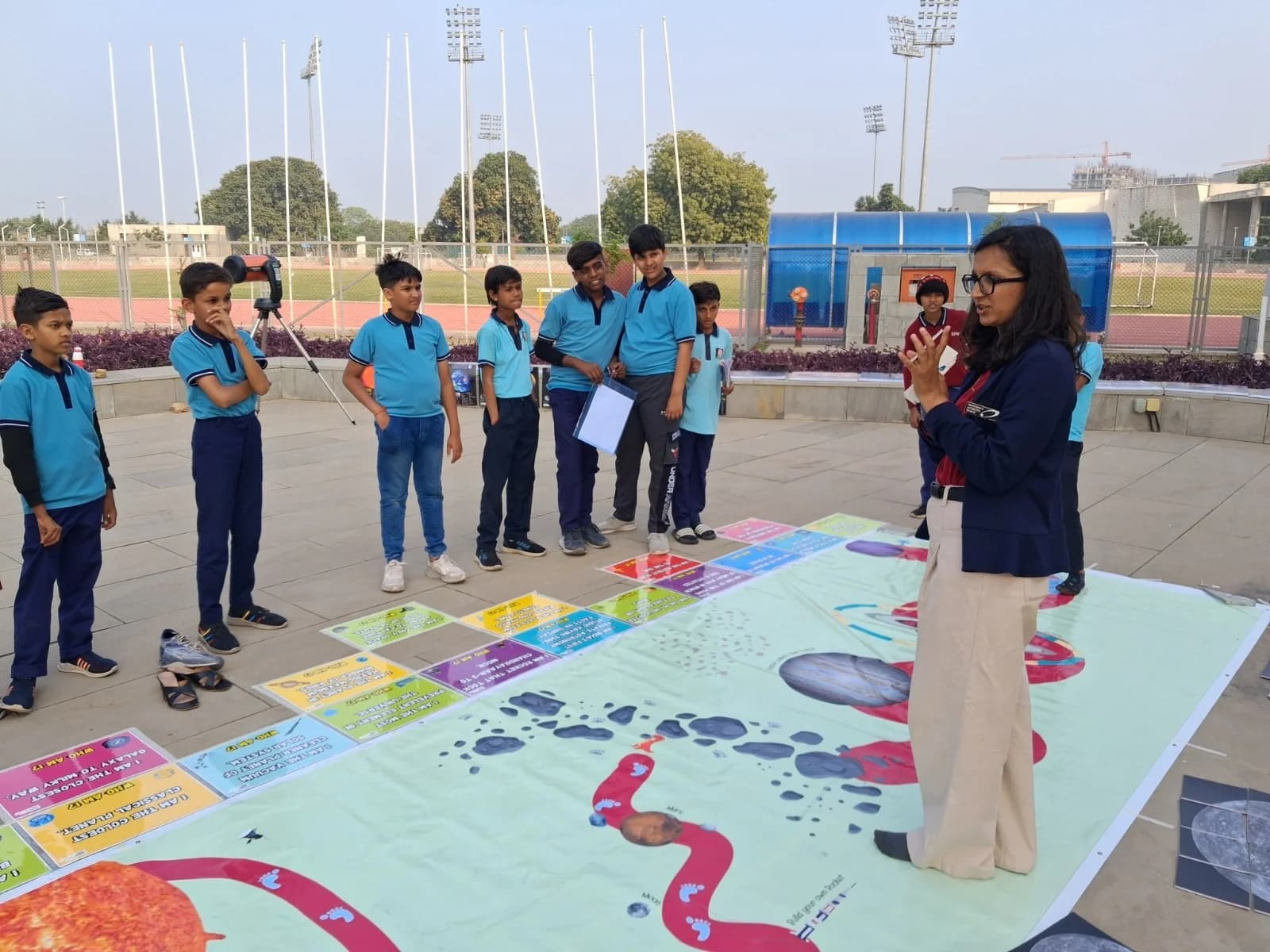
Tour the Museum, join a club night, book a school batch, or simply walk in curious - there is no wrong door.
 02
02Look, touch, ask
Guides love questions. Models, 3D films, telescopes, and stories turn abstract chapters into lived memory.
 03
03Keep watching the sky
Eclipses, meteor showers, and planet seasons return every year - we help you know when and where to look next.
Learning alongside India & the world
Certificates, collaborations, and inspiration from space science institutions - the same logos you know from missions, textbooks, and news.
In the news
Trusted by families, schools, and the city press
Local coverage, TV segments, and years of public sky events - we love when the community looks up together.
Browse media archive ↗Did you know?
Pocket-sized mysteries for bedtime astronomers
Three quick brain-ticklers - the kids page has many more with playful answers.
Open the curiosity corner →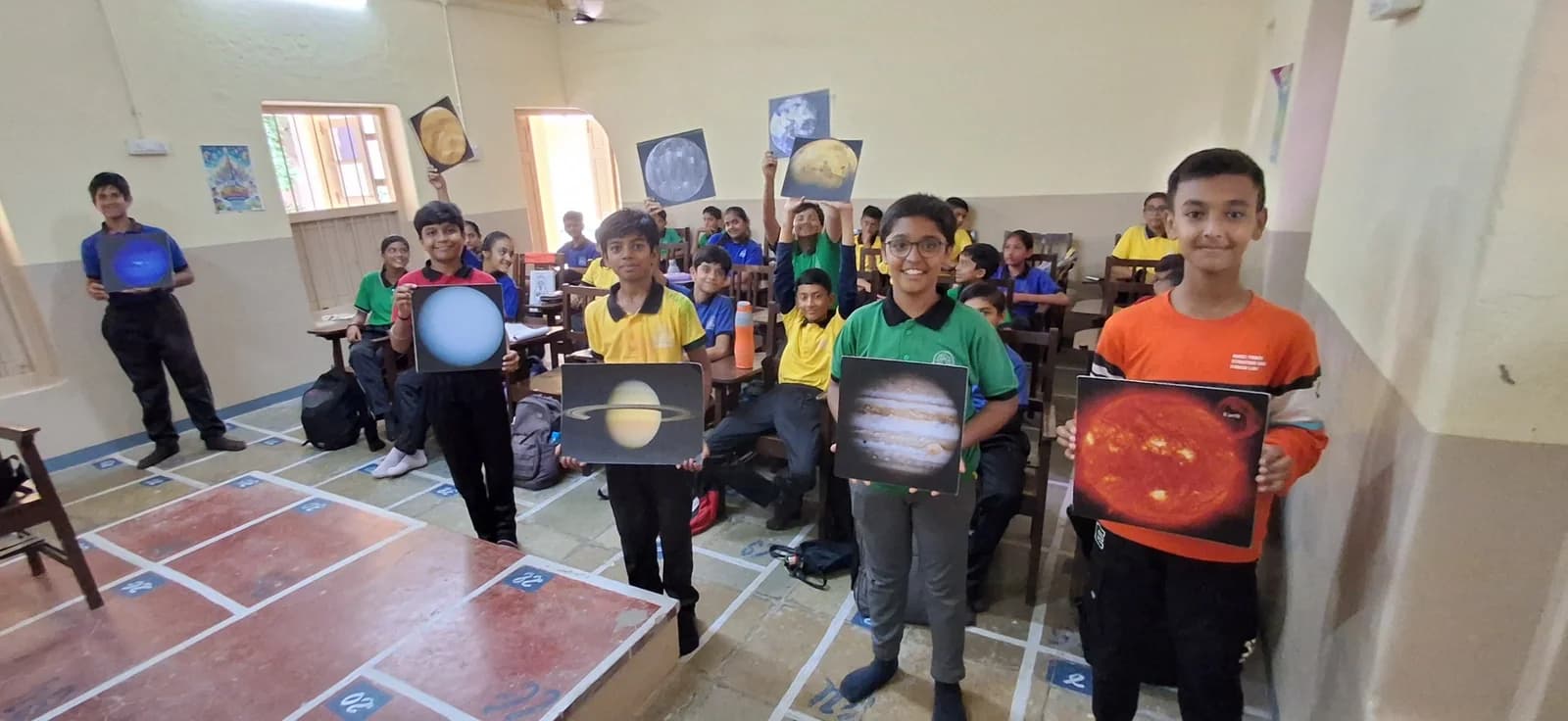
“Why do stars twinkle but planets don’t?”
Starlight is a tiny point that gets bent and jiggled by Earth’s moving air. Planets look slightly bigger in the eyepiece, so the wiggles average out - they shine steadier.
“How long would a sunbeam take to cross our galaxy?”
Light needs about 100,000 years to travel from one side of the Milky Way to the other. That is why astronomers use light-years - distances are enormous.
“What is a light-year, really?”
It is a distance, not a time. One light-year is how far light travels in a year - about 9.46 trillion kilometres. It is a cosmic measuring tape.
Why a whole building for astronomy?
Because the sky is not a paragraph - it is a 360° experience. Models, films, telescopes, and patient mentors together create memories that outlast any exam syllabus.
We are here for the child who draws Saturn with rings, the parent who missed a meteor shower, and the student dreaming of ISRO. Ahmedabad is the city of Dr. Vikram Sarabhai - this Museum is our way of keeping that spirit bright, public, and joyful.
- ✓Structured learning paths for schools and hobbyists alike
- ✓Real observations - comets, eclipses, transits, meteor showers
- ✓A safe space to ask “silly” questions (they never are)
“The best homework is a clear night.”
- Team TAS
Quick answers before you visit
More detail on the Visit page.
Is Tanmaye's Amazing Space officially recognised by any space agency?
Yes. It holds ISRO-recognised Space Tutor status, formalized between 2021 and 2023, under founder Tanmaye Vyas, who has taught astronomy since 1986.
What does Tanmaye's Amazing Space offer overall?
Tanmaye's Amazing Space offers a three-hall space museum, astronomy programmes for individuals and schools, space-themed educational products, telescope observation sessions, and press/media coverage documenting its work, all centered in Ahmedabad.
Does Tanmaye's Amazing Space offer telescope or sky-watching experiences?
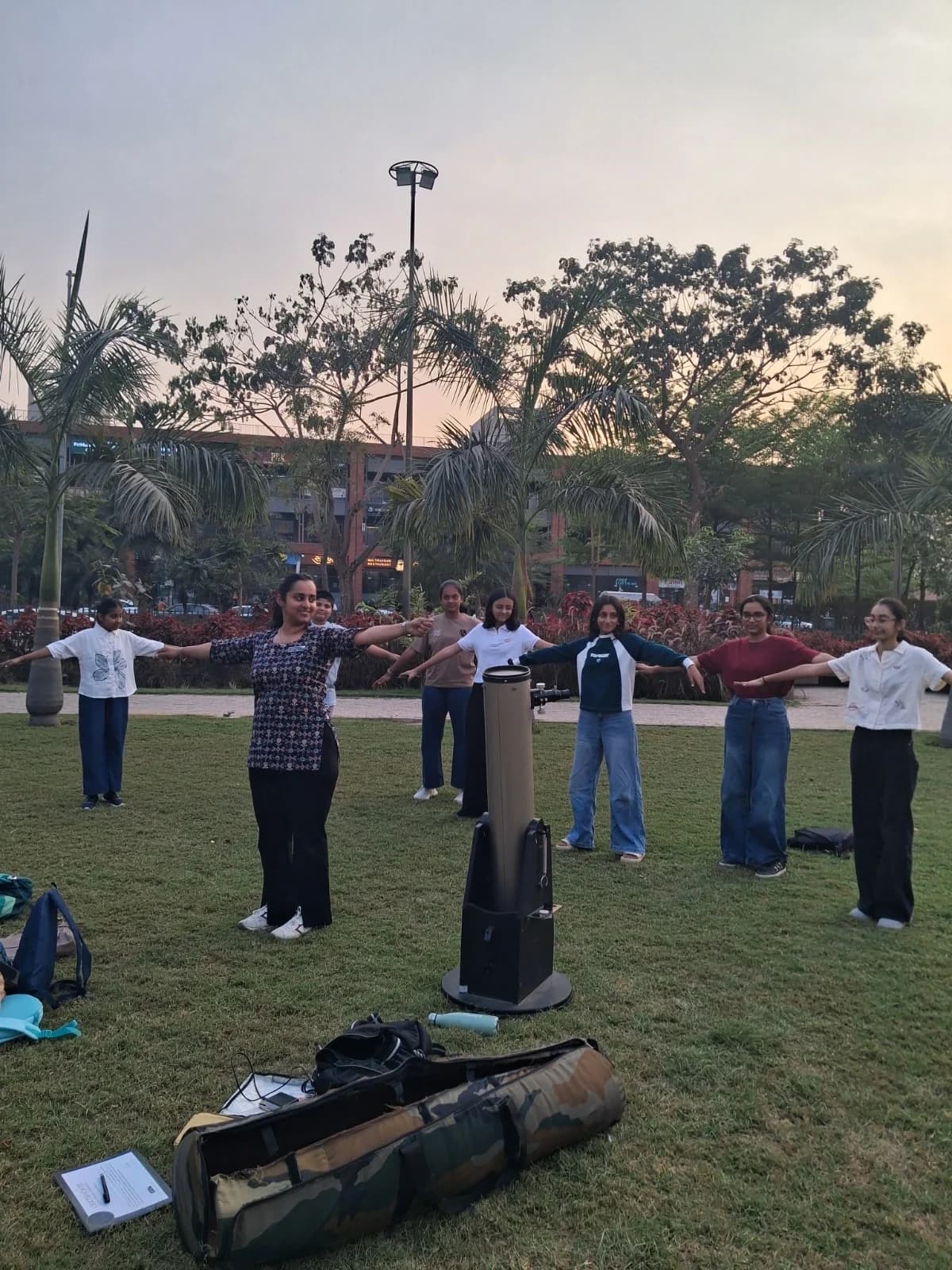
Yes. Over 100,000 people have observed through the telescope to date, with sessions covering real celestial events like eclipses, meteor showers, transits, and occultations.
Who can visit?
Everyone, including families, school groups, college groups, teachers, and individual visitors. No prior science background is required.
Does Tanmaye's Amazing Space sell any products?
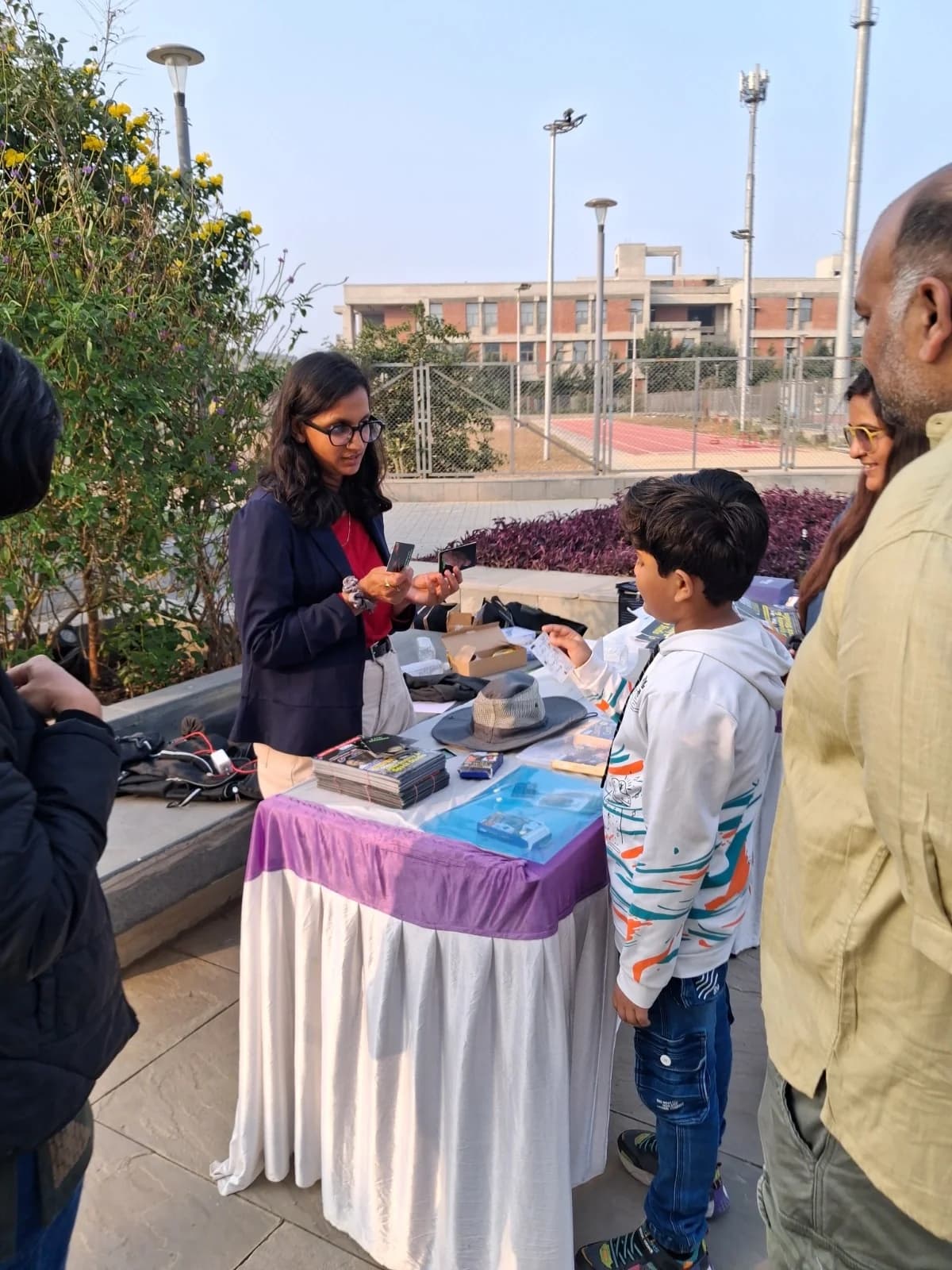
Yes. We sell space-themed flash cards covering ISRO milestones, deep space, and the solar system, designed for quick revision, bedtime curiosity, and classroom use. Browse the full catalogue on our online shop.
Ready when you are
Bring your questions - we'll bring the universe (and the telescope).
Book a Museum tour, get directions, or message us through the channels linked on the Visit page. School coordinators: ask about TASC batches and group slots.